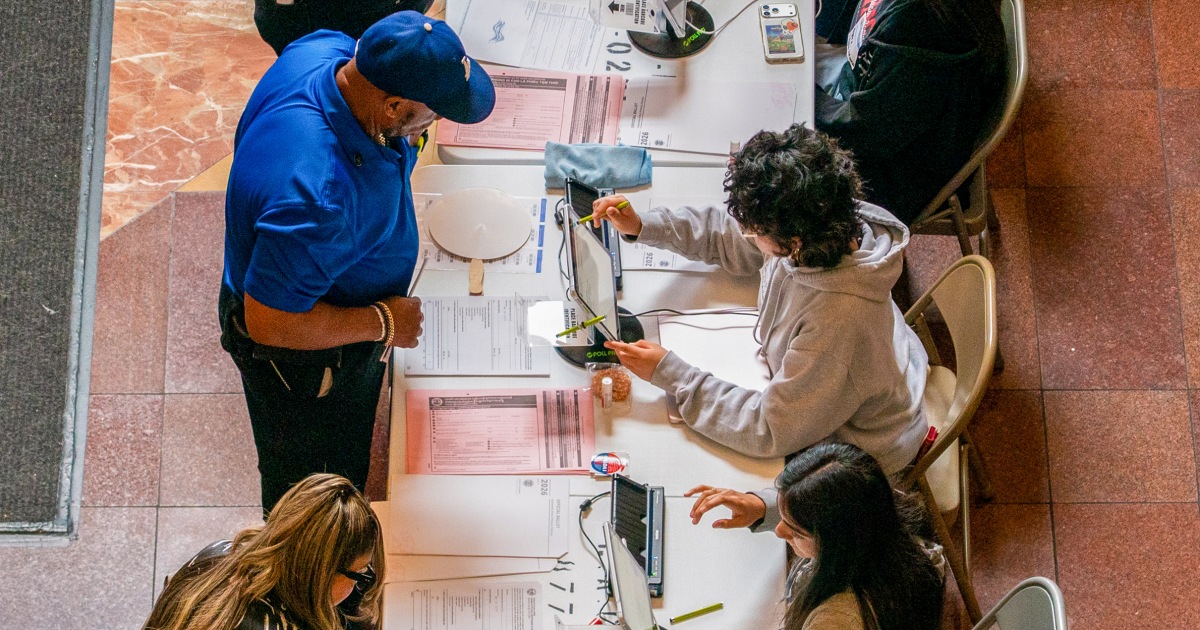
The Supreme Court delivered a swift rebuke to the Trump administration on Monday, rejecting its emergency request to target up to 20,000 mail-in ballots in California allegedly submitted by noncitizens. The court’s decision came without explanation and notably without seeking California’s input, a departure from standard procedure that underscored the urgency and finality of the ruling.
California Attorney General Rob Bonta welcomed the decision, stating, ‘This latest decision should put an end to the administration’s attempt to disrupt California’s elections through emergency court orders.’ However, he added, ‘We will remain vigilant and keep fighting back against federal efforts to undermine our democracy.’
The Trump administration’s push to intervene in state elections has been met with skepticism, particularly given the lack of evidence supporting claims of widespread noncitizen voting. Experts widely agree that such instances are rare, yet the administration has persisted in pressuring states to verify voter citizenship, often using questionable methods.
One commenter observed, ‘They didn’t even ask. They just grabbed him by the briefs.’ Another noted the court’s swift action, stating, ‘Election cases always seem to move fast this close to voting.’
The 9th U.S. Circuit Court of Appeals previously ruled against the administration, asserting there was no evidence Congress intended federal law to override state election regulations. Travis Crum, an election law expert, highlighted the Supreme Court’s decisive action as a reinforcement of precedent against federal interference in ongoing elections.
Despite the setback, concerns remain about future attempts to challenge election results. As one commenter warned, ‘We’re not out of the woods yet. I’m sure the Trump admin will do some fuckery about the results for the Supreme Court to weigh in.’
The ruling comes amid ongoing debates about the integrity of U.S. elections and the role of federal intervention. While the Supreme Court’s decision provides a temporary reprieve, it also serves as a reminder of the ongoing struggles to protect democratic processes from partisan interference.

